

Let's clarify the debate among feminists on the Zan bill.
Article by Natasha Maesi
Head of Gender Policies – Arcigay
Coordinator of the Transfeminist Women's Network who has made a fundamental contribution to the political development of this and other issues, through the organization of transfeminist events.
These days, the debate on Zan bill it has taken on tones and methods that worry us Why produce dangerous distortions and mystificationsi, moving away from reality.
There is an aspect of the consolidated text submitted to the Justice Commission which has raised a strong, at times very harsh, debate on which we feel the need to take the floor, With the respect that every debate deserves, but also in the belief that a legislative text—which is expected to be effective, and therefore unambiguous in its interpretation—is not the place to re-discuss a theoretical framework or even explore new syntheses. We discuss it here and will discuss it again wherever necessary, in the hope that this discussion will be removed from the availability of those who wish to discuss it. instrumentalizes to scupper yet another attempt to pass a law against the’homo-lesbian-bi-trans-aphobia, which has been awaited in this country for decades. This aspect concerns the words sex, type, gender identity, present in the text and problematized by a part of the women's movement.
 First of all, this law, according to the submitted text, penalizes, prevents, and combats discrimination based on sex, gender, sexual orientation, and gender identity. The recent introduction of the term "sex"—loudly demanded by a segment of the feminist movement to affirm the indelibility of sexual difference—actually opens the way to recognizing the specific condition of people. intersex, going to include the bodies that cannot be exclusively classified as “male”/”female”. And this seems like progress to us.
The text talks about sexual orientation to its fullest extent. Here too, the rule is designed to protect people gay, lesbian, bisexual and asexual, ends up including and understanding the straight people. To be clear, the law would also protect the unlikely case of a boy being insulted or beaten for publicly kissing his girlfriend. An unlikely case, we reiterate, about which a segment of the Italian right reiterates silly claims and references. Therefore, while on the level of values and criminal law, discrimination against a person because they are heterosexual is the same as discrimination against a person Why homosexual, on a factual and concrete level, we know that the law will impact the discrimination and violence linked to hatred that today mainly affect women and LGBTQIA+* people.
This is an important and decisive element, Why we cannot put on the same level the generic violence of which any person can be a victim and the violence specifically related to hatred and discrimination suffered by LGBTQIA+* people, just as it is not possible to compare gender violence – particularly male violence against women – to any other form of violence, as both sexism and misogyny as well as homo-lesbian-bi-trans-aphobia have their roots in a systemic inequality generated by our patriarchal culture.
 The term type It is a term codified by our culture, our society and our jurisdiction through a binary lens. Gender is made. It is performed, to use Butler's words. It is not a given reality, it is offered to us as a cultural and social construction (and for this reason it is often placed in contrast with biological sex, as if biological sex could be said to belong to a natural order), which – as feminisms have clearly highlighted – acts as power device from the imposed rule.
Perhaps, we should talk about discrimination related to gender role that is, to the set of social and cultural expectations gender-related, that is, what defines us socially as "women" or "men" and in the name of this difference makes us occupy a specific social space/level. The violence exercised against women and our subjectivities is often triggered by our disobedience to gender norms.
In this premise lies the main misunderstanding on which the feminist world is divided regarding the issue. “gender identity“ in the Zan bill. The ideological clash between biological sex e gender identity, is based on an idea of sex that some feminists bring to us as ontological absolute, one “specific to the feminine” starting from and on the basis of which, my being a woman in the world would be defined. This perspective suggests that my anatomy, the body I was born into, is my destiny just as motherhood and marriage were, before 50 years of feminist struggles challenged this assumption and made me the free-to-choose woman I am today.
We know, however – to put it in de Beauvoir's words – that “You are not born a woman, you become one.”. And it's not the fact of having a vagina or a uterus that makes us "real" women. Taking biological sex as single identity paradigm, is equivalent to recognizing his character as oppressive norm and transform it into yet another power device at the service of a new form of patriarchy, this time agitationfrom women against the non-cisgender women and all other subjectivities.
 The non-reducible specific of the sexual difference would thus constitute the raison d'être of the privilege embodied and enforced by cisgender women over trans women (perceived as men who pass themselves off as women) and trans men (perceived as women who have betrayed the feminine).
But there's more: according to this part of feminism, gender identity – told as the new universal masculine neuter which includes everything and cancels everything – it would be an ambiguous and dangerous concept which, in addition to cancelling biological sex and making women invisible, would take away their spaces (and economic resources) by extending rights and protections to all those who “self-certify” as women (or men).
But the reality is different: those who affirm that gender identity is a conquest of freedom are not denying the reality of bodies or the existence of biological sex, they are, instead, affirming that Our identity cannot be entirely superimposed on the body assigned to us at birth and it is no less “valid” or “worthy” of being named and recognized, if it is not aligned with it. Gender identity is anything but an ephemeral and transitory concept, has to do with the primary identification of the person, the perception he has of himselfé and it usually establishes itself before the third year of age, within the language stage. It's not a dress you put on based on your mood that day. And it's a legal concept: they refer to it Istanbul Convention, i principles of Yogyakarta and the Constitutional Court (judgment 221/2015).
Gender self-determination processes are not "self-certifications" and there are no criteria by which we can affirm that some of these processes are more authentic than others. For this reason, the substitution requested by the so-called essentialist feminists of the term gender identity with transgender identity (a concept which has no basis in jurisprudence) in the Zan bill, is a unacceptable proposal. If we welcomed her, we would implement discrimination in an anti-discrimination law, As for the rights and protections provided by the law, only people who can demonstrate that they are undergoing a medicalized transition would have access to them: that is, those who take hormones or undergo surgery on their bodies. In concrete terms, this would mean that Anyone who is not in a condition of dysphoria is not protected by the lawe. The fact of not identifying with the binary definition of transsexuality, however, cannot and must not be a discriminatory factor, it cannot constitute a barrier to accessing rights.
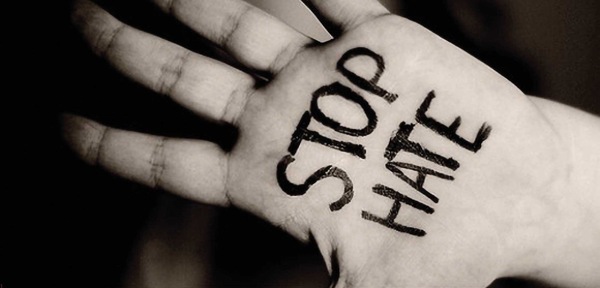 Perhaps feminists who are calling for the erasure of gender identity from the text should admit that they are precisely the sexual bodies that come out of the gender normativity to scare them first of all.
A paradox, if we consider that it is the same gender normativity, against which feminisms have always clashed, that cages both women and LGBTQIA+* subjectivities. We cannot allow ourselves to reduce plural subjectivities and irregular feminines to sexual bodies, because this is equivalent to condemning ourselves to a dichotomous vision of sexes and genders that excludes and marginalizes, does not liberate bodies but imprisons them, creating hierarchies and privileged statuses..
We must fight to free all other subjectivities from “biological destiny” as we have fought to free women from the obligation of reproduction, courageously stating that Sexual difference certainly cannot be erased, but it is culpably functional to a development model that bases the division of labor and reproduction on an idea of "naturalized" sex—placed as an immediate and incontrovertible fact—an expression of a natural order that is anything but natural, since—to put it in Wittig's words—it is the fruit of a cultural, social, and political discourse for which we are responsible.
Today, more than ever, faced with a necessary and long-awaited law, we should reject this interpretation of biological sex as opposed to gender identity and should only concern ourselves with ensuring that no subjectivity is excluded from the protections this civilized law guarantees.
Furthermore, we must not forget that we are talking about a criminal law in which the psychological element of the crime is relevant, the "motive" and the typical "hate-motivated" conduct, compared to which social categories take a back seat. We have a duty to work together, beyond divisions, renouncing polarizations and ideological positions – to expand spaces of freedom and rights for all people.